Executive Outcome 09 — Govern AI authority
Which decisions has your organization already delegated to AI?
The governance gap is opening faster than any regulation. Before you can govern AI, you have to know what authority it already holds — what it can recommend, what it can decide, and what it can execute.
Review our AI decision authority
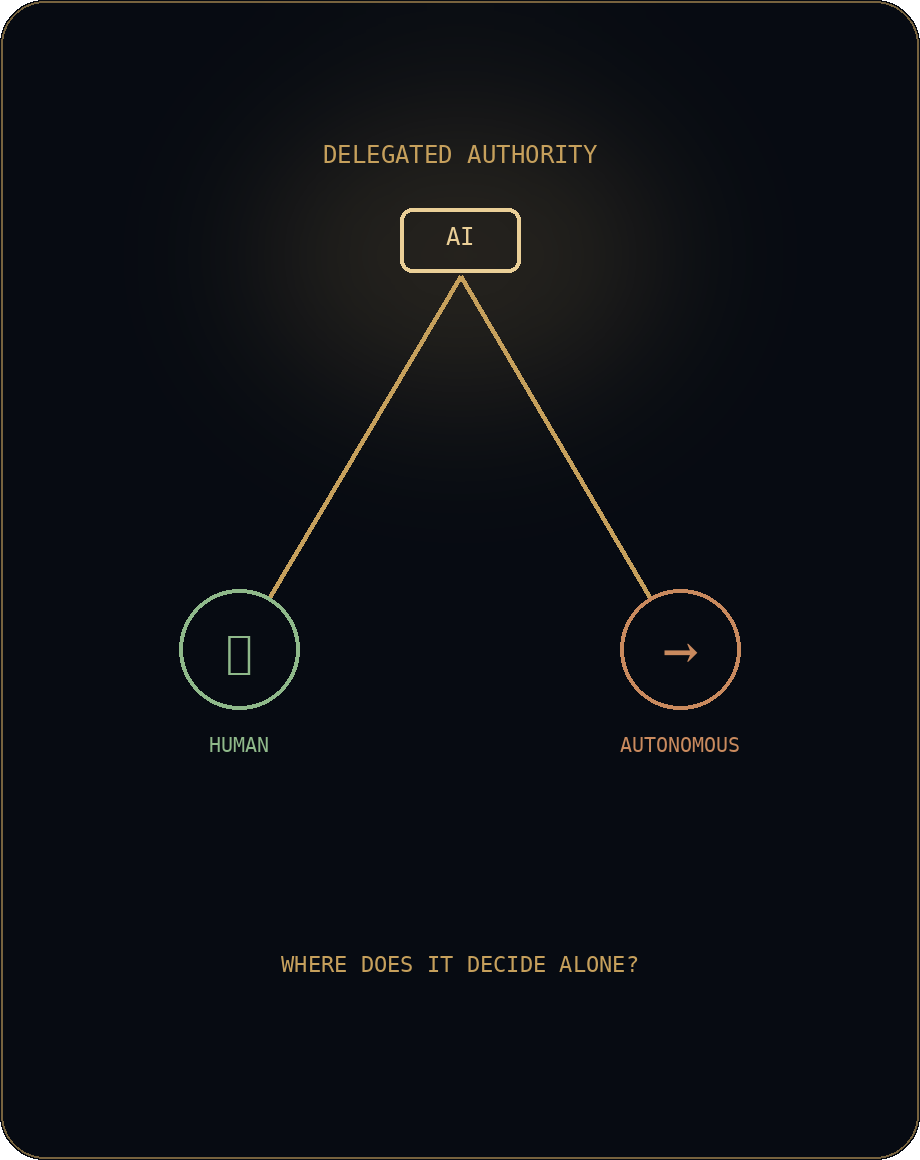
Teams are already feeding sensitive data into tools no one approved, and AI systems are quietly acquiring the authority to recommend, decide, and act. Innovation compounds daily — so does ungoverned exposure.
When an autonomous system makes a consequential decision, the questions arrive fast: Who authorized it? Was it within the authority we granted? Who answers for the outcome? For most organizations, those answers do not yet exist.
Where AI may recommend, decide, or execute — the human approval thresholds, the systems it can reach, and who is accountable for its decisions.
What each AI system can recommend, what it can decide, what it can execute, and which systems and data it can reach.
Where human approval is required, where it isn’t, and whether escalation and stop-execution actually work.
Whether a consequential AI decision can be reconstructed later — context, policy, and evidence retained.
A named human authority for the decisions AI makes on the organization’s behalf.
Leadership can see the decisions already delegated to AI, the authority each system holds, where humans remain in control, and who answers when it acts. This is the bridge from conventional AI governance to ADS-Ω — governing the authority itself.
A map of what your AI systems can recommend, decide, and execute — the authority delegated, the human thresholds, and who is accountable — bridging conventional governance and ADS-Ω.
If a cyber, technology, resilience, or AI decision carries material business consequence, bring us the decision before it becomes the loss.
Review our AI decision authority30 minutes · Independent · Vendor-neutral · Nothing sold